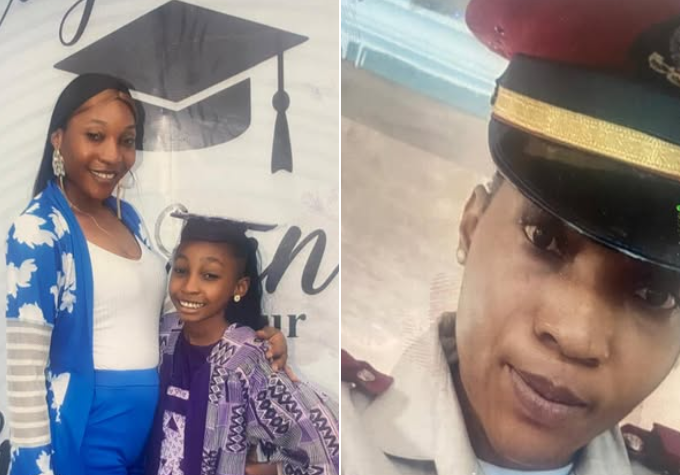
The mutilated remains of a missing Federal Road Safety Corps (FRSC) officer, Funmilayo Oluwamayokun Lasisi, and her teenage daughter, Sewa, have been discovered in the home of a suspected herbalist in Osun State, in what authorities believe to be a ritual killing.
The shocking discovery has thrown communities in Ogun and Osun States into mourning. Lasisi, a 39-year-old Superintendent Route Commander with the FRSC, and her daughter were declared missing on November 2 after leaving their residence at Obasanjo Hilltop Estate in Abeokuta, Ogun State. Their disappearance sparked widespread concern, with family members and colleagues appealing for information about their whereabouts.
According to reports, their mutilated body parts were found over the weekend at a suspected herbalist’s den in Osun State. The gruesome find was confirmed by sources close to the investigation, including a family contact who shared updates on social media. The case has since been handed over to the police, who are pursuing leads to unravel the circumstances surrounding the killings and to bring those responsible to justice.
Lasisi was a respected officer within the FRSC, known for her dedication to road safety enforcement and her role in coordinating operations across multiple routes. Her sudden and violent death, alongside her daughter, has left colleagues devastated. The FRSC has yet to issue an official statement, but insiders describe the incident as one of the darkest moments in the corps’ history.
The suspected ritual killing has reignited debates about the persistence of harmful practices in parts of Nigeria. Community leaders and activists have condemned the act, calling for stronger enforcement against ritualists and greater protection for vulnerable individuals. The discovery also underscores the dangers posed by criminal networks that exploit traditional beliefs for violent ends.
For the Lasisi family, the tragedy is immeasurable. Friends and relatives have taken to social media to express grief and outrage, demanding swift justice. The case has also drawn national attention, with many Nigerians urging authorities to intensify crackdowns on ritual killings and ensure that perpetrators face the full weight of the law.
As investigations continue, the story of Funmilayo and Sewa serves as a painful reminder of the urgent need to confront ritual-related violence in Nigeria. Their deaths highlight not only the personal devastation of families but also the broader societal challenge of eradicating practices that undermine safety, dignity, and human life.
Leave a Reply